Editing student incidents is the process of either adding a new incident for an individual student or editing an existing one. You may also delete existing entries. This is done one at a time (unlike serving actions). In AdminPlus.com there are two methods for accessing and editing student incidents. It can be done either from the Edit Student Incident screen (School > Incidents > Edit Student Incidents). Or you may also add, edit, or delete student incidents by navigating to an individual student's (one student) incidents (Students > Incidents). Keep in mind that Incidents may also be added via the AdminPlus Mobile app. This document specifically covers the process of the Edit Student Incidents screen (under School).
TABLE OF CONTENTS
Edit Student Incidents Screen
To edit an existing incident entry, or add a new entry via the Edit Student Incident tile and screen:
- Navigate to the Incidents screen in the School area
- Then on the Edit Incident tile, click the navigate icon
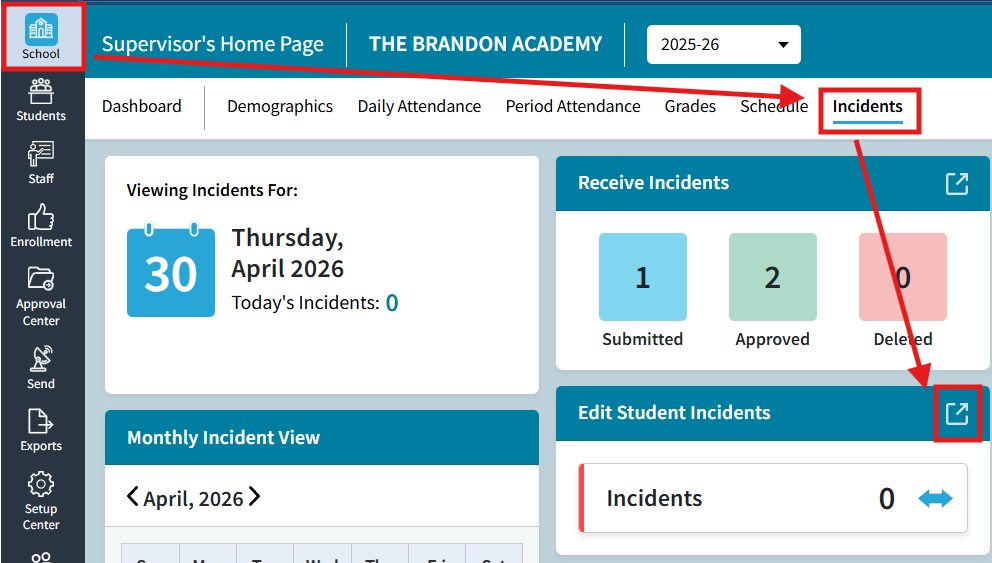
- The Edit Student Incidents screen opens with today's date active. If there are already any existing incidents they will be displayed.
Note that the date picker can be used to display, add, and or edit incidents from a different date.The date selected is very important as the screen only displays events by date. If you are looking to edit an existing incident from this screen it is imperative that you know the incident date. If you do not know the incident date but know the student's name, then you will need to access the incident directly via the student record (Students (One Student) > Incidents).
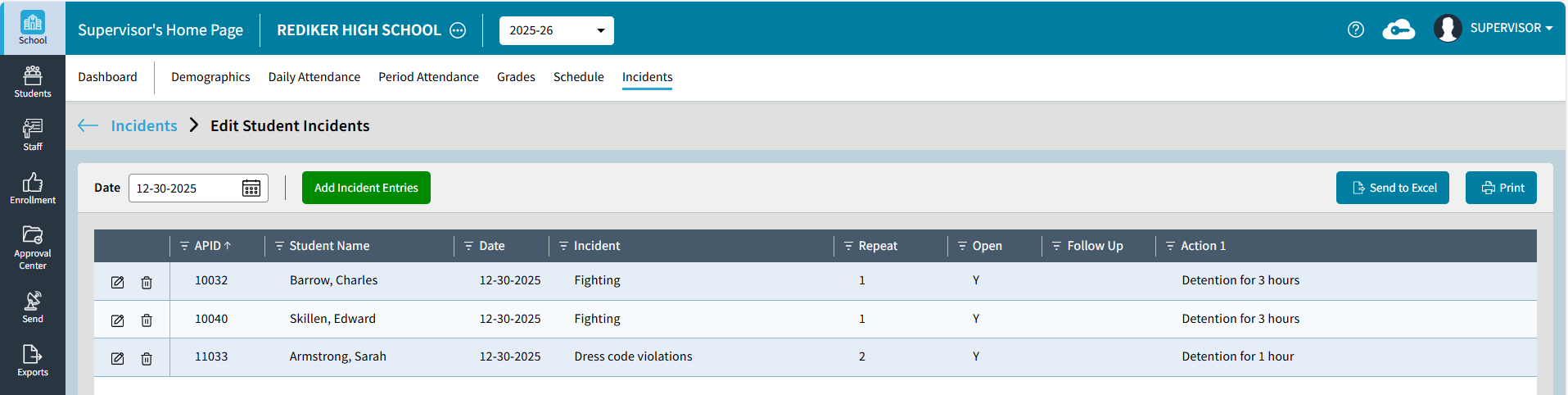 On this screen incidents are showing by date
- Each entry is per incident listed with APID, Student Name, Date, Incident Description, Repeat, Open, Follow-Up and Action 1.
- Repeat Indicates if this student has previously had the same incident (code) reported.
- Open indicates if the Action on the incident has been Served (i.e. countermarked with a Served Code)
- You will now either Add, Edit, or Delete entries for the selected date.
Add Incident Entries
Please note you can also add incidents via the AdminPlus mobile app or directly via the Student: Incidents screen (One Student)
- While on the Edit Student Incidents screen, click on the Add Incident Entries button (upper left next to the Date)

- Search for and select a student and click Next
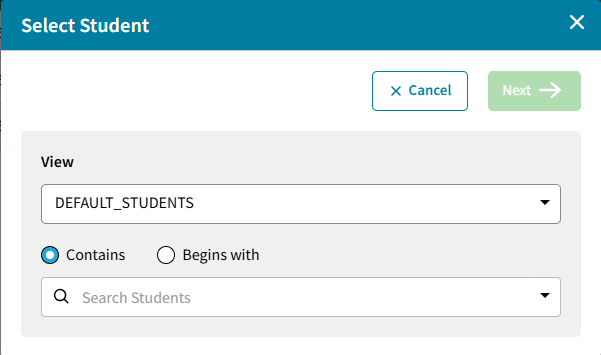
Please note you can only select and add an incident to one student at a time. There is no batch entry for incidents or actions at this time. However, you may save and another to expedite entry for multiple students.
- On the Add New Incident screen enter the incident details (incident code, location, staff, action, etc.). If necessary, please see notes about Incident Details found later in this document.
- Once the details are entered click Save to save this incident and return to the Edit Student Incidents screen. Alternatively, you can choose Save and Add Another to save this incident and begin adding another by select a student.
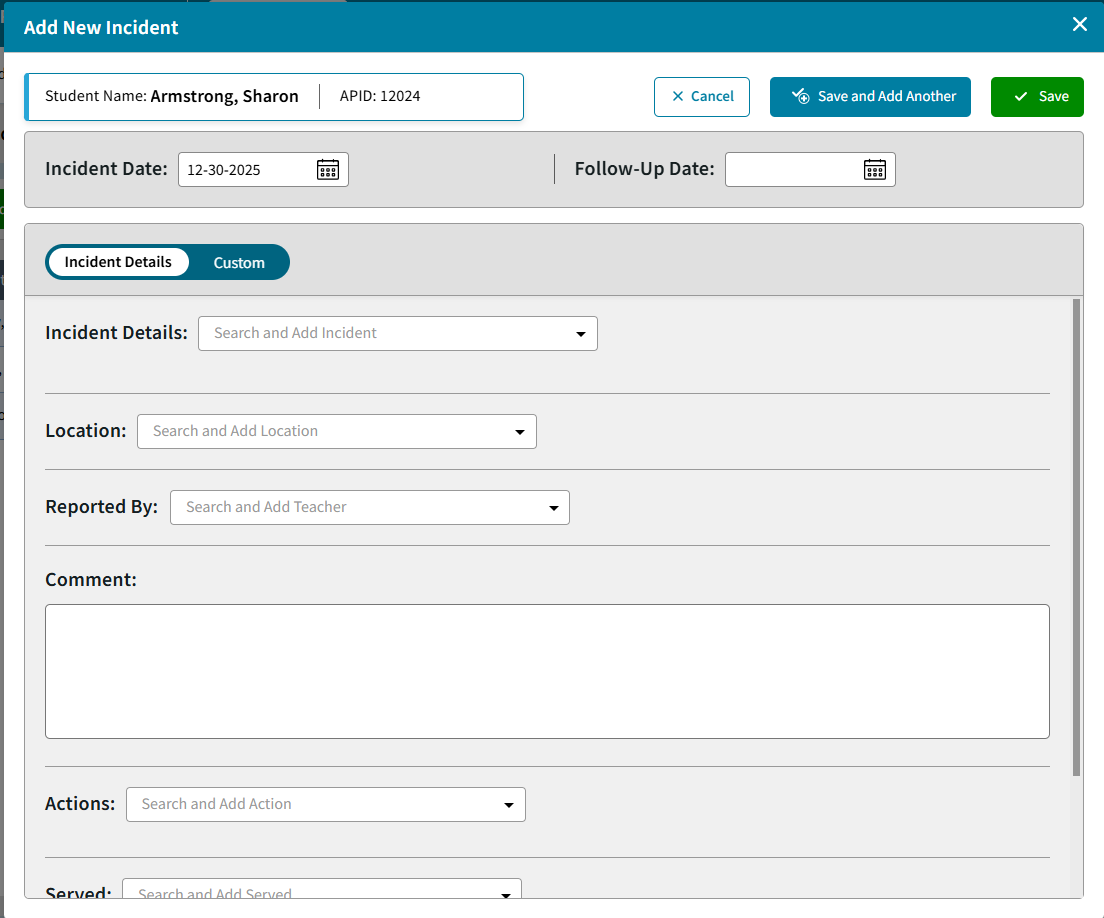
Edit an existing entry
- Select a student on Edit Student Incident screen. Note that you may need to change the date on this screen in order to see a specific incident that you wish to edit.
- Click on the Edit Icon (on the left end of the student incident row)
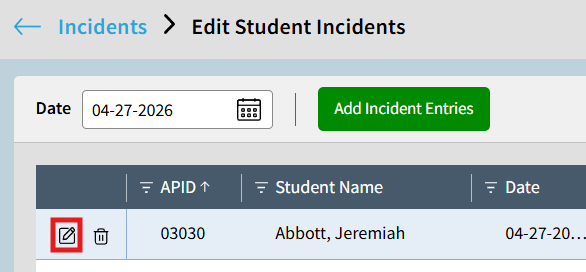
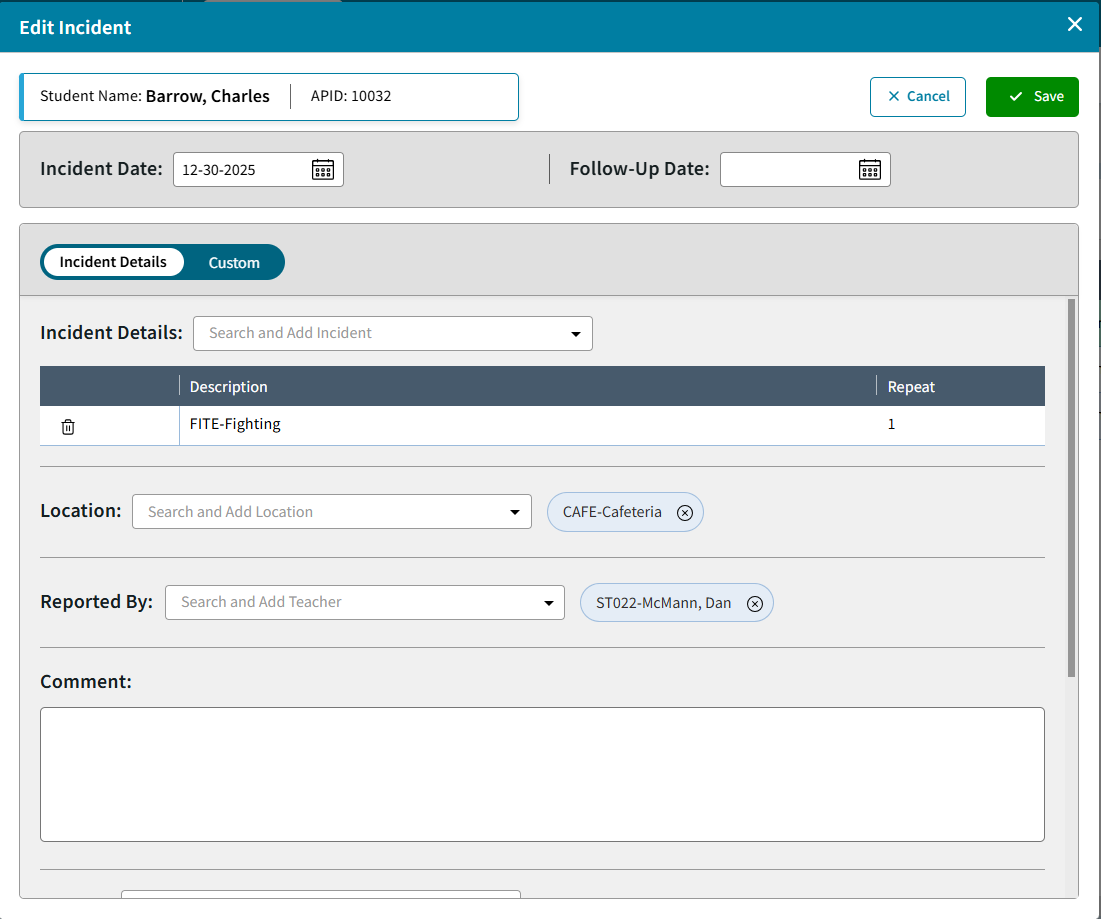
- The Edit Incident window opens.
- Here you can update and change the incident details like date, or remove/add selections such as incident, action, staff, location, etc. as well as update the comment. See notes about incident details.
- To save your changes click Save.
Delete an existing entry
- Choose the date on Edit Student Incident screen
- Choose the Incident you want to delete
- Click the Delete icon (trash can icon left of APID)
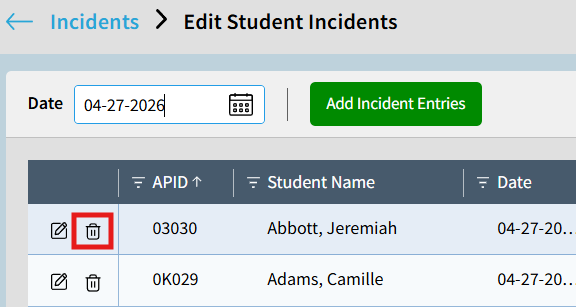
- Then select Yes on the confirmation pop-up.
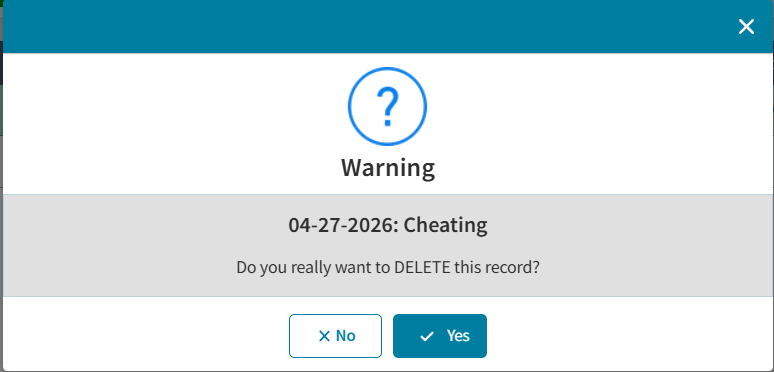
Please note that this is a permanent deletion from the student's record. There is no undo for this action. Manually added and Deleted incidents do NOT show under the Received Incidents Deleted tab. That is only for incidents sent from PlusPortals that were then deleted without approving.
Incident Details
When adding or editing an incident you will be prompted to fill in the necessary incident details. Most of these details are optional and based on the Incident Codes (found in the Setup Center). Below we will explain each of the Incident items.
For accurate record keeping and reporting it is recommended that, when possible, you add appropriate details like Staff and Location, even though they are considered optional items.
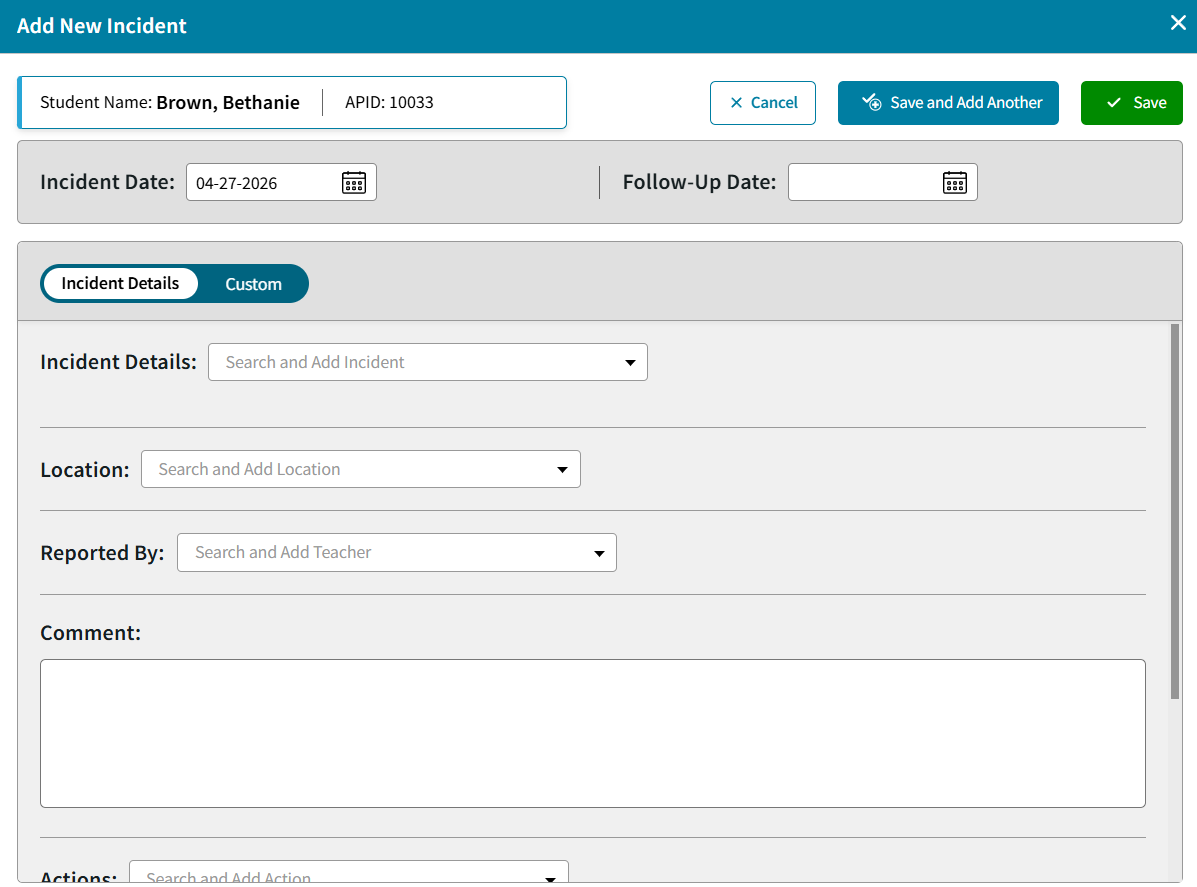
Incident Date

The Incident Date is required and defaults to the date currently selected on the Edit Student Incidents screen (usually today). You can change and update it when entering an incident that occurred on a different day.
Many of the incident dashboards and lists use the Incident Date. Always verify the dates are accurate for reporting. For example, the Fast Served Features creates a list and is run by Incident Date. Also, please note that the Incident Reports feature is focused on a date range looking at the Incident Date.
The Edit Student Incidents screen is date-based. If you save an incident with a different Incident Date than the date currently selected, it will not appear in the list until you switch the screen date to match.
Follow-Up Date

Follow-Up Date is optional. Use it if your school documents a follow-up meeting date (scheduled or completed) related to the incident.
For Example, if the incident occurred today and you plan to meet with the student next week, enter the expected meeting date as the Follow-Up Date.
Please note that currently, there is no Follow-Up Date Report, List, or Data displaying on screens or tiles. That is expected in future releases.
Incident Details
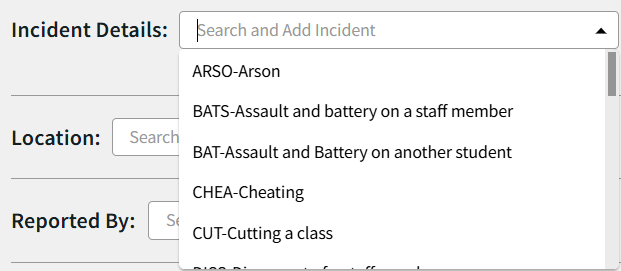
Incident Details is required and is where you select and add the Incident Code(s) for the write-up. This represents the behavior policy for which the student write up is happening.
You must select at least one Incident Code. If there is no incident code that represents the incident being entered, you will first need to update your school's Incident Codes in the Setup Center.
You can select up to five Incident Codes per incident. However, it is recommended that you use one primary code per write-up. If you select multiple codes, make sure the first code reflects the primary reason, as many reports assume the first code is the main incident. Additionally, most screens display the incidents using the first incident code listed.
Location
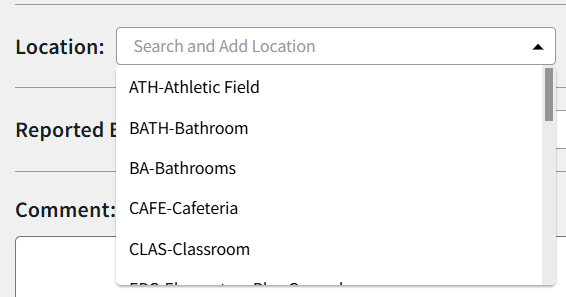
This represents the place (and time) that an incident took place. Adding a Location is optional but strongly recommended for trend tracking (where/when incidents occur). You can select up to five Location Codes.
It is recommended that you select at least one location. Add additional locations as needed to capture both time and place (for example, “Before School” + “Parking Lot”).
If a needed location is missing, a supervisor must add it in the Location Codes library in the Incident Codes.
Reported By
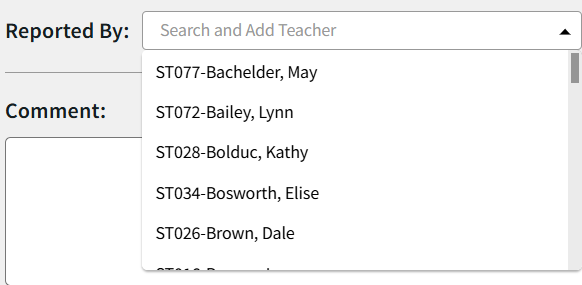
Reported By lets you record which staff member(s) reported or documented the incident. You can select up to five staff members. If you list multiple, make sure the first name is the primary reporter.
This is considered optional; however, it is recommended you Include at least one reporting staff member so administrators can follow up if questions arise. Add additional staff if they witnessed or responded to the incident.
Comment
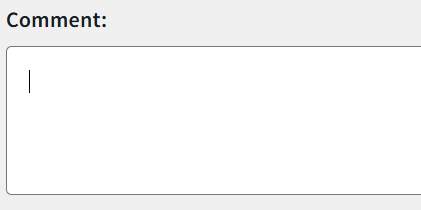
This is a plain text box and is an optional narrative field for incident details.
This comment field is often included in reports and can be visible in PlusPortals when sharing incidents. Keep comments factual and school-appropriate. If you need to store internal-only notes, consider using a Custom Incident Category Table instead of or in addition to the Comment field.
Actions
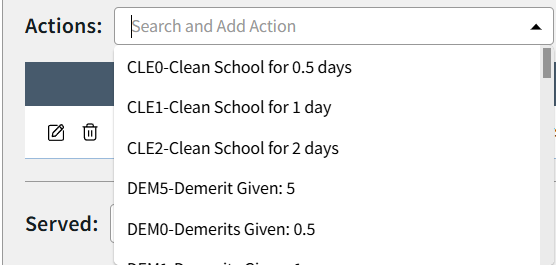
Actions, while optional, are used to record what the school response is to the incident, for example, assigning detention hours. Actions are typically configured to link and add (or accumulate) into an Action Summary code (though that is not required), creating an outstanding action until served. Select the appropriate Action Code(s) and enter the correct Action Date. Take note of the Action Summary and Amount that the action has been configured with.

When you add an action, it defaults to the Incident Date. Update the Action Date to the date the action is intended to occur (or occurred). Keeping in mind the action date is primarily for good record keeping most lists and reports are by Incident Date.
As is the case with other incident detail items you can add up to 5 action items on a single incident. However, again, the primary action should be the first action added. Most screens will display the incident with Action 1 showing.
If an Incident Code is configured with Default Action Codes, AdminPlus may automatically add actions when you select an incident. You can remove auto-added default actions or add different ones as needed. Default Actions occur because the Incident Code(s) selected were configured with them.
If a needed action is missing or a new action is required, a supervisor must add it in the Action Codes.
Default actions are recommended; they save both data entry time as well as ensure fair and uniform policy application.
Served
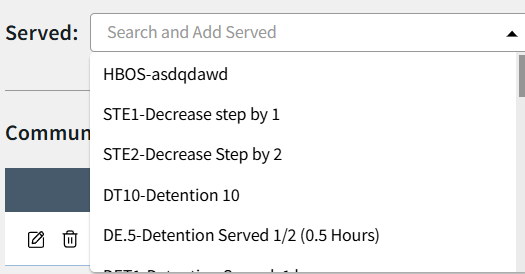
Served codes are added when the student completes an assigned action. Select the appropriate Served Code and Served Date to credit the student (for example, after they attend detention). Served codes will subtract from the outstanding actions owed for this student.
For example, if an assigned action of 1 Detention is used, but because the student already served it, we also add a served code for 1 Detention, this now means the student has no outstanding actions for this incident. However, the action would still increase (accumulate) total detention actions for the year.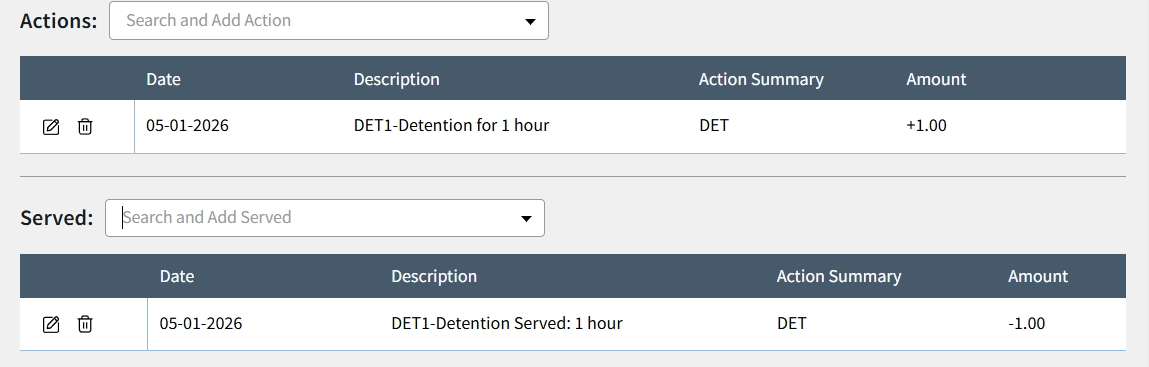
Served codes are usually added later (after the action is completed), not during initial incident entry. Served Codes can also be added as a batch entry via the Fast Served feature.
Communication
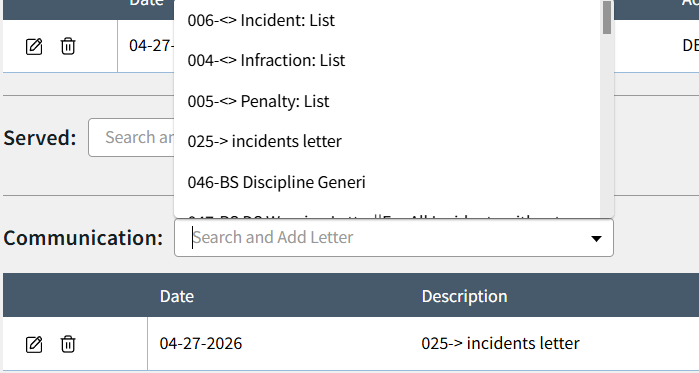
This field appears in AdminPlus.com, but it is currently tied to and only used in AdminPlus Classic report-writing workflows. It displays a list of Discipline Report Codes from Classic; however, it is not currently used for generating letters within AdminPlus.com. If you are generating a specific Discipline Letter in AdminPlus Classic, whether you add the letter code in AdminPlus.com or allow the report writer to add the code from AdminPlus Classic depends on your process.
Custom
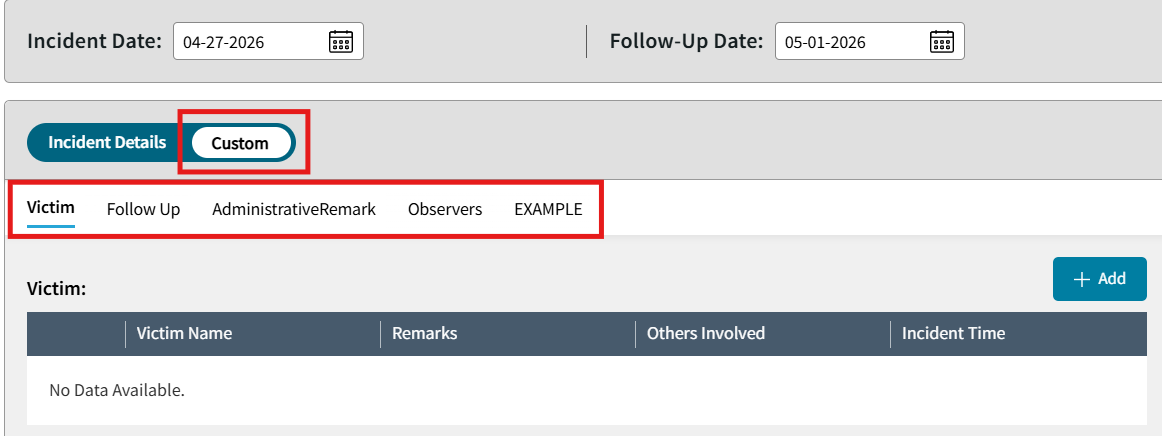
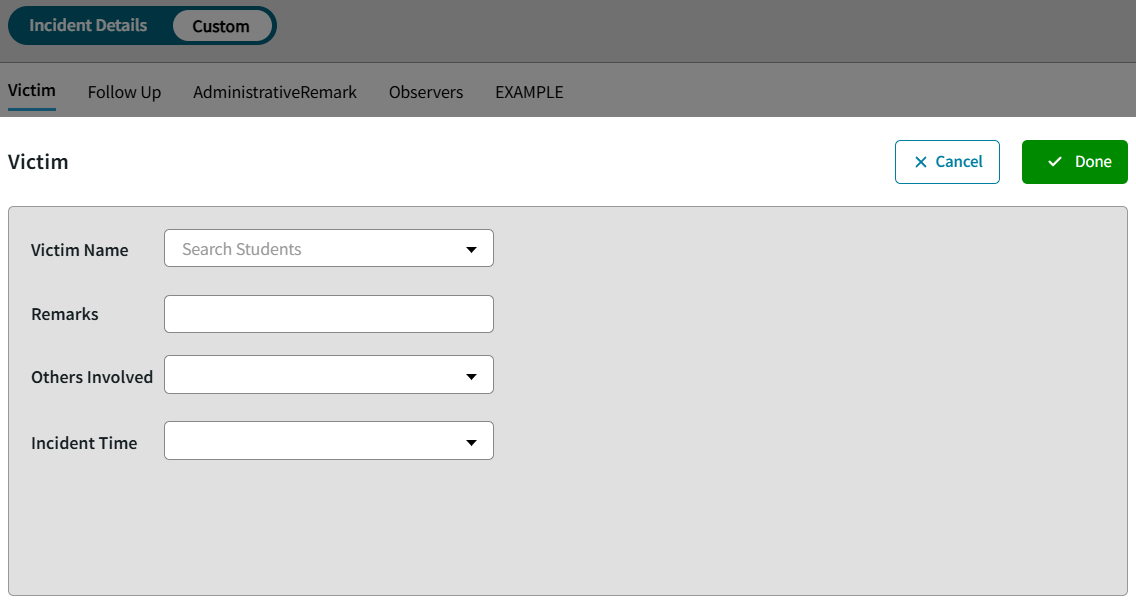
When you toggle the switch to "Custom" it lets you access and enter additional fields from your school’s Custom Incident Category Tables (if configured). Use these tables to capture extra data that doesn’t belong in or cannot be entered via the standard Incident fields. Select the appropriate Custom Table, then complete the fields that appear for that table.
A custom table for Administrative Remarks would be a better place for internal remarks instead of the default Comment box.
For example, the included Victim table allows for fields like another student to be named as a victim as well as remarks.